What is Risograph?
A printing process that makes a separate stencil for each color and layers ink on paper.
Risograph turns digital files into stencils quickly, while keeping the texture of paper and ink. It is a favorite for ZINEs, posters, flyers, and other printed pieces with a distinctive use of color.
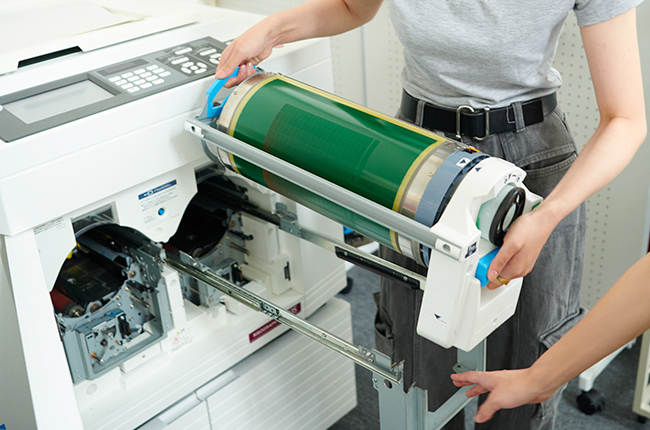
Risograph prints through a stencil.
Risograph is a digital stencil duplicator developed by RISO KAGAKU CORPORATION. It creates tiny openings in a thin stencil called a master. The master wraps around a cylindrical drum, and ink is pushed through it onto the paper.
It belongs to the same family of stencil printing as silkscreen. Instead of a screen, it uses a master made automatically from digital artwork, making this printmaking process easy to try.
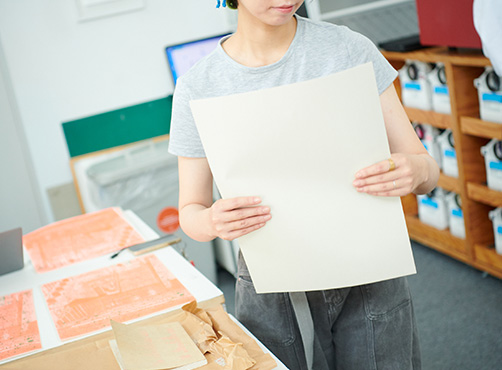
Why do texture, small shifts, and overlapping colors appear?
Ink passes through the openings in the master and lands directly on the paper. The paper surface and absorbency can slightly change solid areas and fine lines.
For multicolor work, the same sheet is printed once for each color. The paper can move slightly between passes, causing small shifts in alignment. Where inks overlap, they create colors that do not appear in either ink alone.
These small variations are part of Risograph’s character and appeal. Thoughtful file preparation and test prints are essential for a consistent result.
What it does well, and what takes more care.
Works well for
- ZINEs, booklets, and artist books
- Posters, flyers, and event handouts
- Postcards, shop cards, and art prints
- Small runs and larger batches of paper goods
Needs more care
- Exact reproduction of photographic tones and colors
- Multicolor artwork that needs very precise alignment
- Printing that must have exactly the same color and density every time
Photos and multicolor artwork are possible, but they need color separation, density adjustments, and test prints.
Make something, then share it directly.
Events such as Bungaku Free Market and ZINE Festival give people a place to share self-published books and paper goods directly. Risograph ZINEs, artist books, and postcards are a familiar sight there.
It is easy to begin with a small run, and choices such as ink and paper can become part of the work. That is one reason Risograph and ZINE-making go so well together.
How it differs from offset and inkjet printing.
There is no single best method. The right choice depends on what you want to make and how many copies you need. Some carefully made ZINEs and artist books combine several printing methods, using different processes for the cover and inside pages.
| Risograph | A stencil is made for each color and dedicated inks are layered on paper. It works well for both small runs and larger batches, with visible paper and ink texture. |
|---|---|
| Offset printing | A commercial process that uses printing plates. It is well suited to fine text, photographs, and large runs with consistent results. |
| Inkjet printing | It prints directly from digital data without making a plate. It works well from a single copy and is suited to photographs and detailed color reproduction. |
Try printing at NOT GUTTER.
At NOT GUTTER, choose from 20 inks and papers available in the studio, then print it yourself. On your first visit, our staff will show you how the machine works. After that, you can adjust density and position as you check your test prints.
You can make ZINEs, posters, flyers, postcards, art prints, and more. Take your finished prints home the same day.
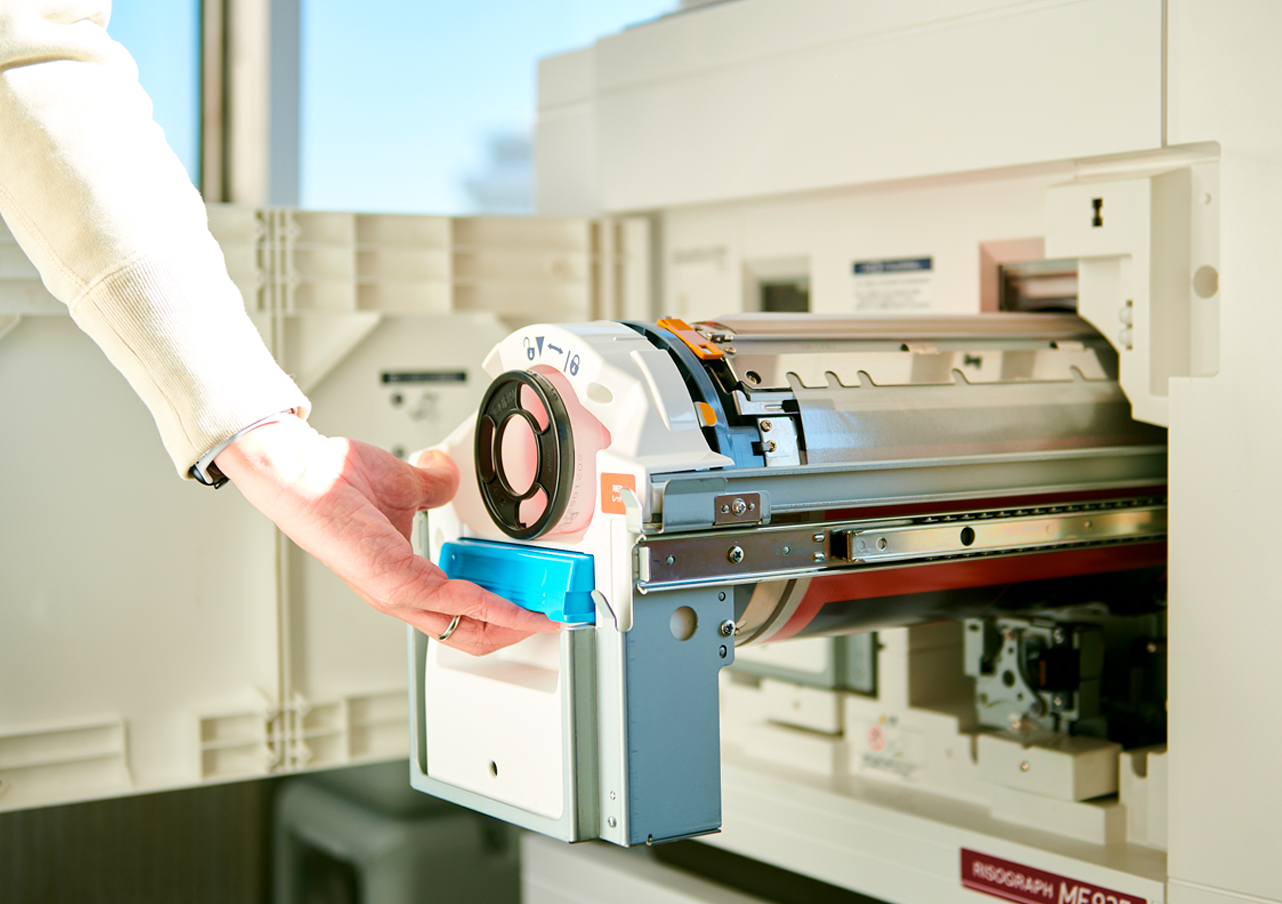
Choose a color, print, and see it on paper.
See how the ink looks on paper, how it works with the stock, and what happens when colors overlap. If it is your first time, start with one or two colors. As you print, the next thing to try often becomes clear.

